
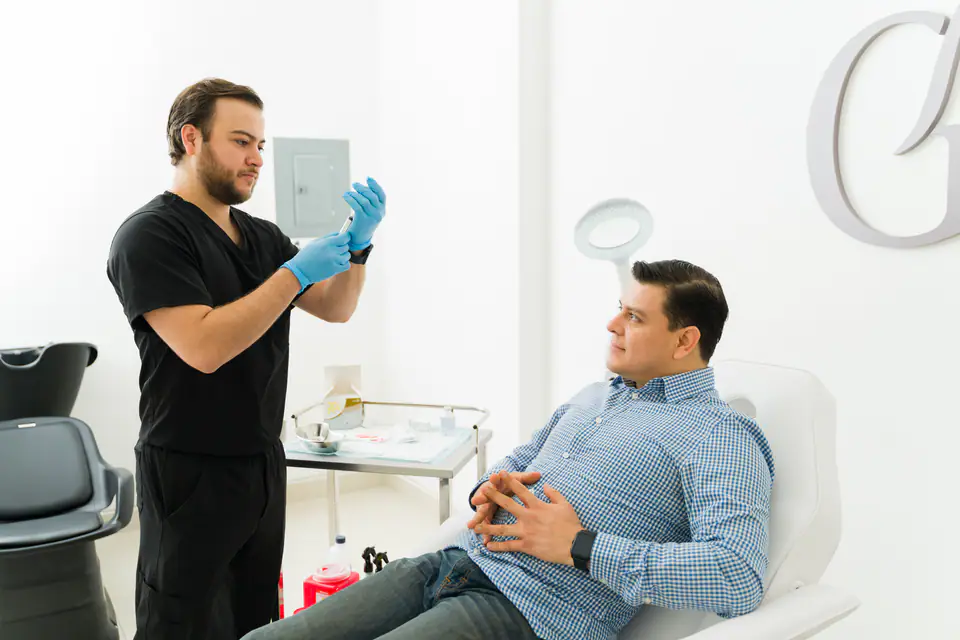
 Medically reviewed by Dr. Omar Alexis Guadarrama Tarazón · Medical License (Cédula Profesional) 14685220
Updated:
What is a hair transplant?
A hair transplant — also called hair restoration surgery or a hair graft — is a surgical procedure that relocates follicles of your own hair from a donor area to the areas where hair has been lost. In Spanish it’s known as injerto capilar or trasplante capilar.
The donor area is the back of the head and, when needed, the sides. These areas are resistant to hair loss — which is why people with baldness usually keep their hair there even when they lose it on top. Once transplanted to the hairline, temples or crown, that hair keeps growing naturally.
At Regenere, hair transplant is the core procedure: a solution that doesn’t require weekly visits and, when well planned, looks natural and lasts for many years.
Hair transplant, hair implant or hair graft: are they the same?
Yes. Depending on where you look, you’ll find the same procedure under different names: hair transplant, hair restoration surgery, hair graft, hair implant or hair transplant surgery. In Spanish it’s called injerto capilar or trasplante capilar.
They all mean the same thing: moving your own hair — not synthetic fibers — from the donor area to the areas where it has been lost. What makes the difference is the technique; at Regenere, FUE and DHI are combined.
How does a hair transplant work?
It’s an outpatient procedure: no hospital stay, and you go home the same day. It happens in five stages:
1. Consultation and diagnosis
The doctor examines your scalp, the density of your donor area and the cause of your hair loss. If your hair loss is caused by a scalp condition, it’s treated first with trichology.
2. Hairline design
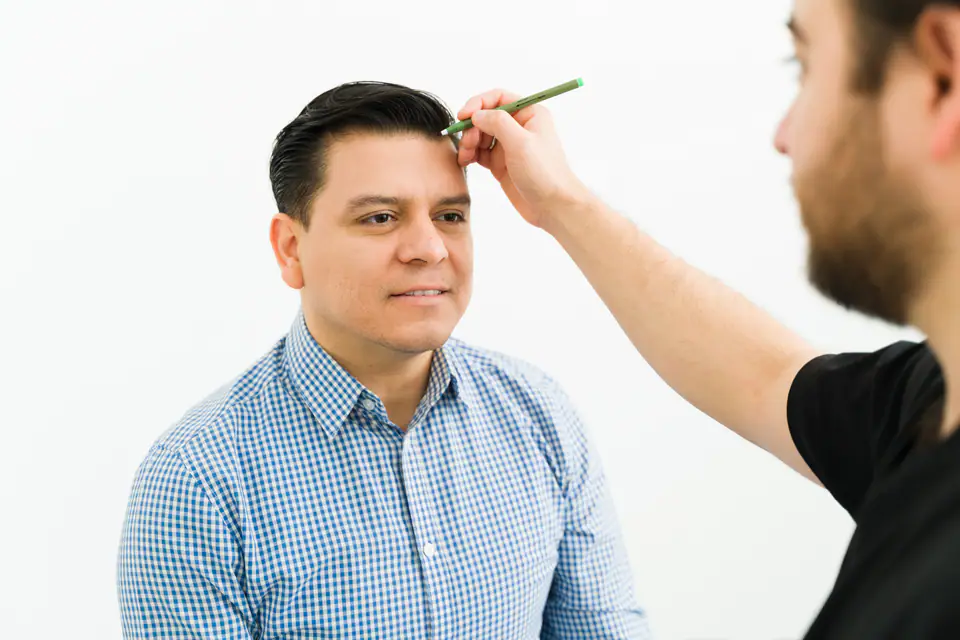
Before the procedure, your hairline is drawn individually, based on your face shape, natural pattern, age and density. See how we design natural hairlines.
3. FUE extraction
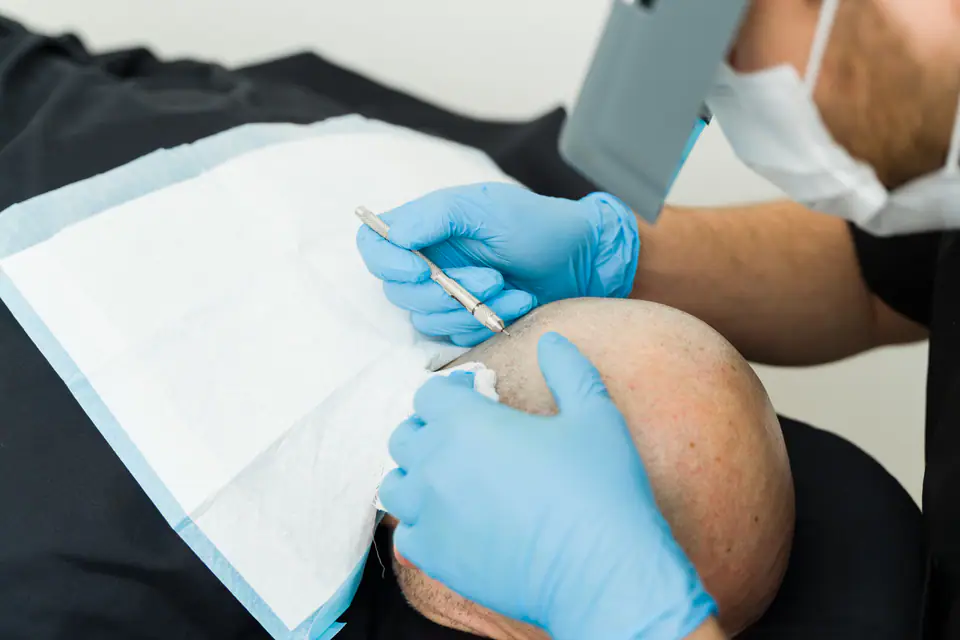
With the FUE technique (Follicular Unit Excision), follicles are extracted one by one from the donor area — no strip of skin is removed.
4. DHI implantation
With the DHI technique (Direct Hair Implantation), follicles are placed directly into the balding areas using implanter pens, controlling the angle, direction and density of each one.
5. Recovery and follow-up
You go home with your instructions and medication. The first two weeks matter most — read our hair transplant aftercare guide.
Who is a good candidate for a hair transplant?
A medical consultation is what determines whether a transplant is right for you. In general, you’re a good candidate if:
- You have pattern hair loss (androgenetic alopecia): receding temples, a receding hairline or thinning at the crown.
- Your donor area — the back and sides — has good density.
- The cause of your hair loss has been identified and, if needed, controlled.
- You have realistic expectations about the density that can be achieved with your own hair.
- You’re willing to follow aftercare for the first weeks and medical therapy for at least one year.
A hair transplant can be an option for both men and women. If your hair loss is caused by an autoimmune condition such as alopecia areata, treatment is usually medical rather than surgical.
What results can you expect?
The result of a hair transplant is your own hair: it grows, and you can cut, style and color it like the rest. What makes it look natural is the hairline design and placing each follicle at the right angle and direction.
Results are gradual. During the first weeks it’s normal for the transplanted hairs to shed — the follicle stays under the skin and grows new hair. New growth usually starts around month three or four, and the final result is assessed at about 12 months.
How long does a hair transplant last?
A hair transplant can last a very long time — 20, 25 or even 30 years in many people. It varies from case to case, and some people need a touch-up over time. That’s why medical therapy during the first year is a key part of the result: it protects your hair from dihydrotestosterone (DHT).
As Dr. Guadarrama explains, it isn’t just about having the procedure and heading home: for at least the first year you’ll take medication that blocks dihydrotestosterone (DHT), the hormone that causes hair loss. This protects your hair and helps maintain your result.
How much does a hair transplant cost in Mexico?
The cost of a hair transplant depends on the size of the area to be treated and how many grafts you need. That’s why there’s no one-size-fits-all price: every quote is given after a personalized consultation, where we also walk you through the full plan.
Message us on WhatsApp and we’ll help you schedule your consultation.
Why choose Regenere for your hair transplant?
- An individualized hairline — never a generic template.
- FUE + DHI, one follicle at a time.
- Direct care from the doctor, from consultation to follow-up.
- Outpatient procedure: you can travel home the next day.
- Online follow-up for patients from the U.S. and other cities.
- English-speaking doctor and 5.0 on Google from 17 patient reviews.