 Medically reviewed by Dr. Omar Alexis Guadarrama Tarazón · Medical License (Cédula Profesional) 14685220
Updated:
What is hairline design?
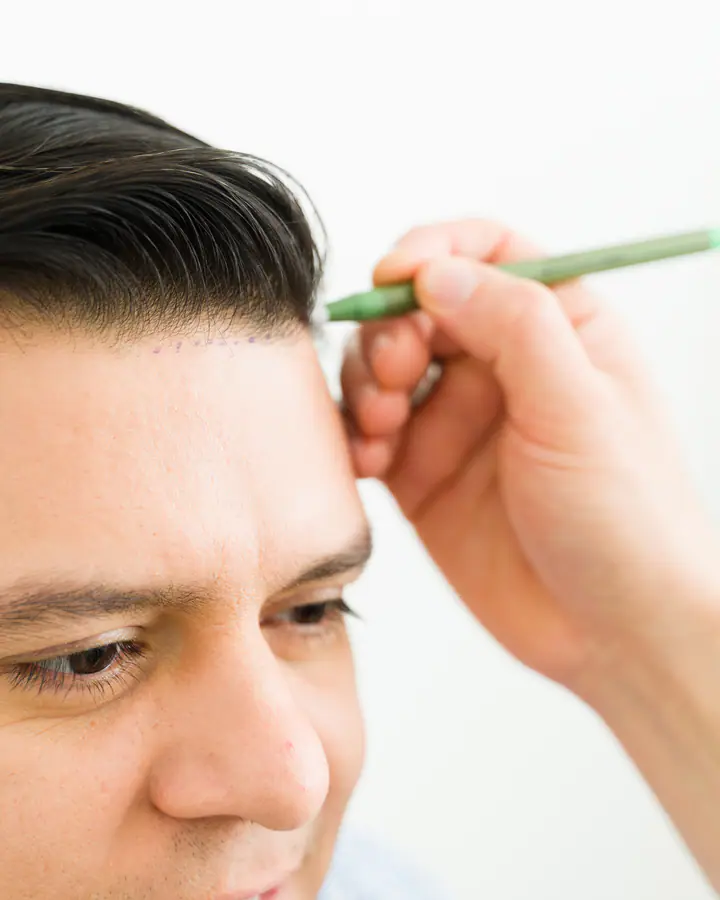
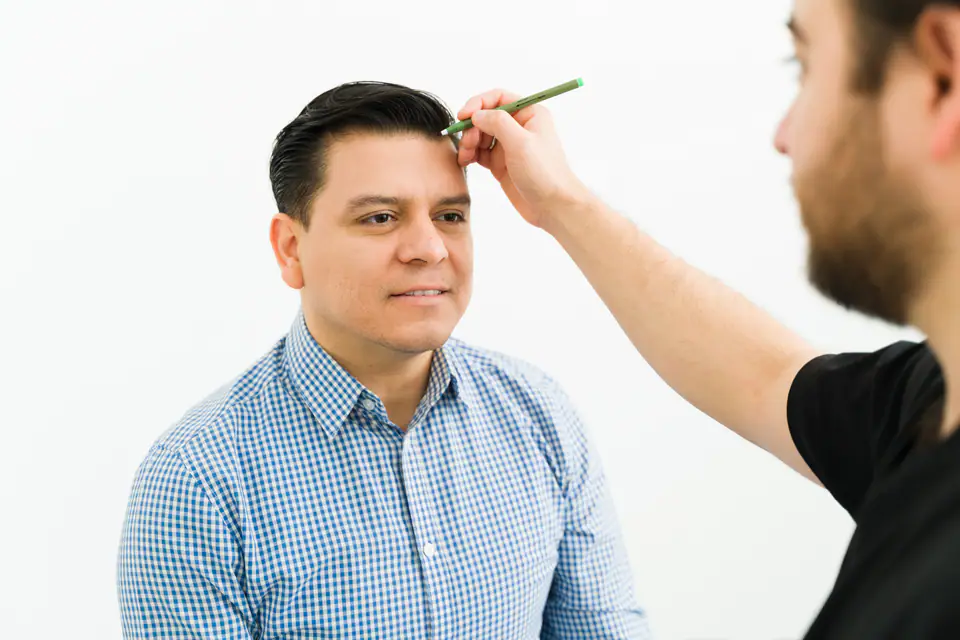
It’s planning where and how your hair will begin after your hair transplant: the implantation hairline. It’s drawn on your forehead with a surgical marker before the procedure and agreed on with you, so you know exactly what result we’re aiming for.
Why is it so important?
As Dr. Guadarrama explains, many people get their transplant at high-volume clinics — Turkey is a common example — where, because of the number of patients, transplants are done generically: everyone gets the same design, regardless of whether their face is oval, round or square, or how their hair used to look.
The result shows: a hairline that doesn’t match the face, or someone who naturally had receding temples suddenly doesn’t. It looks artificial.
“My philosophy is that the hairline should look as natural, as organic and as individualized as possible.”— Dr. Alexis Guadarrama
What we take into account to design your hairline
Your face shape
An oval, a round and a square face each call for a different hairline. The design aims for harmony with your features.
Your natural hair pattern
If you naturally had receding temples, respecting them is part of a result that looks real. The goal isn’t to change who you are — it’s to get your hair back.
Your age
Your hairline should look right today and keep looking natural for years to come.
Your density and donor area
The design is adjusted to the hair available in your donor area, to achieve natural-looking density where it shows the most.
What is the process like?
- Consultation: the doctor assesses your face, your hair loss pattern and your donor area.
- Drawing: the proposed hairline is drawn directly on your forehead.
- Review with you: we adjust it until you’re happy with the design.
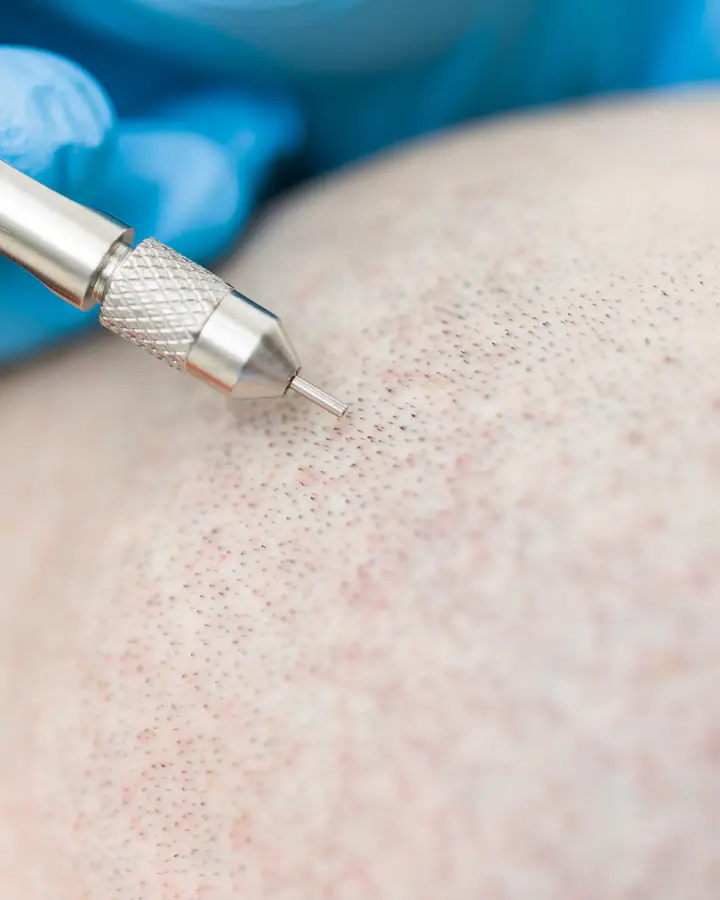
- Implantation: with the DHI technique, each follicle is placed following the design.